Showing posts with label American Dream. Show all posts

Monday, June 23, 2014

Storage Wars: The Evolution of Excess

When A&E premiered the first airing of Storage Wars in December 2010, I'll bet the producers thought they would have a smash hit. And they do. The show is now in its fifth season with plans for a sixth, hosting some of the old faces and a few new ones. Do you like the show and, if so, who is your favorite buyer?

Cast of Real Characters

The oldest member of the show, and my favorite, is Barry Weiss, known as "The Collector". He is portrayed as perhaps having the least amount of money to work with, but he's willing to take chances. He searches for that one oddity that will at least break him even. Brandi and Jarrod bring their unusual relationship to the show as "The Young Guns". They always seem like they're on the verge of ending their partnership with continuous disagreements and Jarrod's signature cross-armed stance.

The characters who have made a real impact on the show are Darrell Sheets and Dave Hester. Darrell, "The Gambler", recently brought his son Brandon into the picture and their family is now notorious for two things. Darrel is responsible for the biggest payoff in the show's history. A locker that he purchased for $3,600 ended up containing several Peter Gutierrez paintings Darrell sold for $300,000. Also, inside another purchased locker, the body of a woman was found wrapped in plastic. The previous male owner had killed his wife and subsequently disposed of her body. Wow....


Dave Hester, "The Mogul", made himself into the man you love to hate. With his annoying "Yuuup" and his big white trucks splayed with his name in big letters, he always made a scene. And if all of that flash of ego didn't rub you raw, then his crew of 3 or 4 guys spilling out of the trucks like worker ants should have finished you off. His story, though, ends in the courtroom. Dave has accused the show's production company, Original, of staging fake lockers and providing money for bidders. He was fired from the show and his court battle rages on today.

The crew of Storage Wars represents what can happen in a world of excess. The evolution of consumerism has driven our society to be filled with metal buildings housing a bunch of valuables that have lost their value to its owner. True, there is money to be made through these auctions, since another person's trash is another's treasure. However, I believe that many Americans who own these units have lost sight of some of the core values of life. Not intentionally, though. They just need to be reminded of an old aphorism that dates back nearly 100 years and introduced to the evolution of a new way of thinking.

Stepping Back in Time

The odds that someone reading this article will remember the Great Depression is rather slim, although I am hopeful that the babies from the 20's and 30's are still able to share their stories. With this in mind, there is a lot of information out there about this tough era and what it took to survive. Judy Busk has written an essay for a website called New Deal Network where she recalls the impact the Depression had on her family.
       
          "Gifts were carefully opened, hands delicately loosening the tape so the wrap could be neatly removed and folded to be used again. A ball of string graced our kitchen cupboard; it was made up of hundreds of shorter pieces tied together...Cotton and wool socks were stretched over a worn out light bulb and darned to prolong their use....Printed chicken feed sacks became skirts, flour sacks became underwear."

It was during this era that the phrase, "Use it up, wear it out, make it do or do without", became a household mantra. Although this saying was popularized during World War II, it does have its origins dating back to 1933. Commodities were extremely scarce and so anything at all that was owned by a family had to be stretched to its fullest use and beyond. Judy recounts the story of her mother getting an orange in her Christmas stocking and feeling that it was a deeply treasured gift. In fact, many Christmases didn't have gifts at all. A white-frosted cake would have been the only celebratory piece. It is so neat to read and realize that people appreciated everything, even the smallest of things, that these days we can take for granted. Over time we have lost sight of the lessons of this era and have become slowly blinded into becoming the consumers we are today.

The Rise of Consumerism


After the resolution of World War II, the American economy began its gradual turn around into the wealthy society that it is today. During the 1950's and 60's the concept of "keeping up with the Joneses" became the new trend of American life. It has served as a foundation for the surge of consumerism in this country. Americans are no longer considered to be citizens, but rather, consumers. Purchasing power is what drives our overall economy, however, in the never-ending pursuit of material things, our lives have become cluttered. We buy bigger houses so we can put more stuff in them. Many garages, which were created to house vehicles, now serve as storage units attached to homes. In some surprising ways we too have become the hoarders you can see on popular television. Except in our case, what we are doing is perfectly acceptable by the status quo because the more you own, the wealthier you are. Many times this "wealth" has to be stored somewhere else. There just isn't any more room. It is from this demand that the evolution of the storage units has risen and now permeates our landscape.

The Storage Solution

The history of self storage units has a rather interesting past. According to Ezine articles, the founder of the Self Storage Association, Buz Victor, discovered on a trip to China "that people had been keeping their personal belongings in clay pots for over 6,000 years". The concept took hold much later in Britain, but it really was Buz's entrepreneurial idea that snowballed the idea back in the states. The first facility was established in Odessa, Texas in the 1960's by Russ Williams. He was an avid fisherman and needed somewhere to keep his boats and equipment. He went and purchased several apartments and garages to suit his purpose and because he felt other folks could make use of this type of storage. The units basically sold themselves.

The idea of storage units is a good one with good intentions. It is practically impossible for some people to keep large boats, trailers, RVs, and so forth on their own properties. Our soldiers in the military, too, need somewhere to keep their belongings while off serving our country. In a culture of excess, however, this idea has blossomed into a near epidemic. Rather than get rid of our stuff, we choose to store them out of sight, which eventually means out of mind. Folks are either forgetting to pay the rental bill or realize they simply cannot afford the fees. And this is how the Storage Wars concept has turned into a multi-million dollar industry.

Some Facts in a Nutshell


  • There are more than 48,500 storage units nationwide.
  • The self storage industry in the United States generated more than $24 billion in annual revenues (2013 - estimate). The industry has been the fastest growing segment of the commercial real estate over the last 40 years and has been considered by Wall Street analysts to be "recession resistant" based on its performance since the economic recession of September, 2008.
  • The industry pays more than $3.2 billion each year in local and state property taxes.
  • There is 78 square miles of available storage space nationwide, which would provide every  household in this nation access to 21 square feet. 
  • Storage units have become so popular that many are managed by third-party companies. 

So What Can We Learn?

I think fifteen years into the 21st century most Americans understand that we are a nation of excess. The Internet has given all of us the opportunity to view websites, blogs, and publications that in many ways have exhausted this subject and the many concepts tied into personal finance. At this point you have either decided to change or keep things going they way they always have existed. The real wealth of family and basic necessities is becoming more apparent as we develop into a tightly-knit global community. I see an environment of giving freely to others on Twitter as a way of developing relationships. It is refreshing to be a part of a community that seems to be, for the most part, interested in my well-being and providing help and guidance with minimal strings. These things represent the real value of life, not junk piled up in a storage unit.

Ultimately, the idea of living intentionally is perhaps the best way of breaking free from the bonds of consumerism. This concept was first introduced to me by my wife, and at first I was a little resistant to the idea. Tsh Oxenreider has published two books on simplifying your life and living intentionally. In her first book she really hits the nail on the head with her ideas that purging your house of "stuff" is actually a very liberating experience. I, like many folks, have issues with letting go of things. However, as our family has let go of many things we thought we wanted, we realize that those things were just taking up space unnecessarily. We were spending too much valuable time cleaning up all of the "stuff" that we truly have been able to do without. Let it go already.

Bringing back the Great Depression and World War II aphorism of "Use it up, wear it out, make it do or do without" is a cycle we most certainly need to repeat in America today. In doing so we are able to return back to the roots of filling that inner void - peace with ourselves, our community, and God.

Works Cited

http://www.hollywoodreporter.com/thr-esq/a-e-wins-first-round-428079

http:// ezinearticles.com/?The-History-of-Self-Storage&id=1590718

http://newdeal.feri.org/sevier/essays/frugality.htm

http://www.selfstorage.org/ssa/Content/NavigationMenu/AboutSSA/Factsheet/default.htm

http://www.slate.com/articles/arts/culturebox/2005/07/selfstorage_nation.html

Wednesday, March 12, 2014

The Affluenza Series, Part 2: The Eroding Middle Class

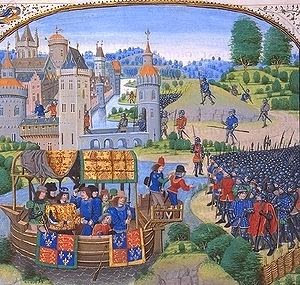
"The Peasant's Revolt, also called Wat Tyler's Rebellion, was a major uprising across large parts of England in 1381. The revolt had various causes, including the economic and political tensions generated by the Black Death in the 1340's, the high taxes resulting from the conflict with France during the Hundred Years War, and instability within the local leadership of London." (wikipedia) During this age in English history there were many such uprisings which were fueled not only by taxation, inflation, and declining incomes of the poor, but also because of the increasing gap between the wealthy nobility and the much poorer peasants. These protests by the poor did increase their living conditions to some degree, however, the economic gap still remained. It is here within the contexts of the Medieval revolts that the desire for upward mobility through social class began to take root. It is also here, in 14th century England, that the story of the eroding middle class begins.

A Better Life

"The American dream has long been held as a fundamental tenet of American life. So most of us would be surprised to find out that the idea behind the dream isn't actually American." -Edward Cahill, Ph.D., associate professor of English, Fordham University

Colonization of America in the 18th century did much to break down class boundaries and open up wealth to everyone. Back in England, citizens were caught up in "the striving for wealth acquisition and status transformation" which remained the prevalent social focus for many of the English since the 14th century. Now there was a huge opportunity to shatter this economic system by crossing the ocean and inspiring the new settlers to build a new life from scratch. After decades of struggle and hard work, it became very apparent that anyone could indeed establish a better life, all you had to do was pursue it.

It wasn't until the 19th century that the concept of the "American Dream" began to fully manifest itself in the minds of many Americans and begin to manifest itself as a reality within their lives. Leading figures "such as Benjamin Franklin, [a] soap maker's son turned American luminary and one of the nation's founding fathers...wrote extensively on the topic of wealth acquisition in his autobiography." (Cahill) His secret to financial success - save your money.

Clashing Values


Ben Franklin was wholeheartedly committed to public service and his attitude toward wealth was directly related to virtue. He believed that upward mobility involved focusing on getting yourself stable, and then once you've accomplished that, then focus on helping other people. Acquiring wealth was not some self-serving greed or "see how much money and stuff you can obtain" type of philosophy as it is today. In Franklin's day it was a blessing to have wealth and the duty of the upper class to pay it forward to less fortunate members of society. Sounds a lot like something Jesus did when he walked this earth.


"Unfortunately our culture has become obsessed with affluence. We now believe that it's our God-given right to live affluent lives." (Cahill) And so the American Dream has become obscured into an ideal that is meant only for some people, not everyone. Our deep narcissism drives us to achieve affluence at any cost, even trampling over people to get to the top. This is a direct side effect of affluenza and would have Franklin turning in his grave to know that the less fortunate have been cast aside.

Around the turn of the 21st century, with the advancement of technology and its availability to the public, "the culture of wealth acquisition began to alter the structure of American society. On the one hand you had a lot more people becoming fabulously wealthy - the number of millionaires grew exponentially. At the same time, the wealth gap between the rich and the poor grew exponentially, too....The rich were getting larger in number as the poor were getting larger in number." (Cahill) The American Dream now has many different meanings based on an individual person or family- from harvesting millions while working in a hedge fund to simply owning your own home or even just having a job. The deterioration or the huge amassing of wealth is driving a wedge between the upper and lower classes. The chart below shows this growing disparity of incomes.


 Affluenza's Greed

So what exactly is causing the middle class to slowly disappear? We know that the boon of the housing market revealed just how many millions of Americans were not living within their means. This revelation is essentially the core symptom of affluenza - using any resource available, whether yours or someone else's, to obtain wealth and social status at any cost and not worrying about the consequences. And, for many, the final cost was home foreclosure - the stripping of the American Dream.

Credit cards are crushing Americans at an alarming rate, so much so that it is assumed and accepted that everyone will accumulate this type of debt. I think it is safe to say that most Americans have more debt than savings because we have become a society of instant gratification. This lifestyle, riddled with massive spending, runs completely contrary to Ben Franklin's philosophy of save, save, save and is a strong contributor to the eroding middle class.

Yearly incomes for the middle class have declined around $3,000 - $5,000 since the turn of the century. Now Americans in this class have less money to work with but the cost of living still increasing. This increase can be seen with food and fuel costs nearly tripling since the turn of the century. To put it succinctly, there are more and more factors continuously arising that are stripping away the ability of middle class Americans to achieve and maintain the American Dream.

Government Intervention

"Most of our elected officials, whether Democrat or Republican, have been bought and paid for through campaign donations from corporate lobbyists and other special interest groups. We've reached a stage where lobbyists no longer merely influence legislation but write the actual language of what becomes law." - Lou Dobbs, War on the Middle Class

Legislation proposed by our "representatives" continues to punch holes in our eroding class system. During the Bush administration there were tax laws passed which eliminated the Estate Tax and implemented some tax breaks that only the wealthy 1% of our country could take advantage of. This kind of legislation benefits our corporations and millionaires by allowing them to keep more of the millions they possess. Legislators also followed suit during this administration by voting pay raises for themselves while the average income of the lower and middle classes consistently fell.


Another type of legislation aimed at eroding the middle class is the Affordable Care Act. This legislation, under the guise of "universal healthcare for every American", has really only affected the lower class society and those seeking to achieve the middle class American Dream. No one in the government sector, the upper class, any corporate manager or leader - essentially anyone making more than $70,000 a year is not adversely affected by the ACA because they get to keep the insurance they already possess and maintain the hours they've always worked. It is only the poor and middle class are suffering from this backwards legislation.

The welfare system and immigrants have always been blamed for the downfall of the middle class. It has been asserted that a large percentage of their income goes toward sustaining the lives of people who, for whatever reason, cannot get their lives straightened out enough to maintain a job. Is this really a factor for the struggling middle class or could it just be propaganda pushed by our corporate and political leaders? All hell didn't break loose when millionaires were given huge tax breaks. However, when a family comes upon hard times in a tough economy and needs a little bit of help to make it through day to day life, they are viewed as worthless bums soaking up money that they didn't earn. The system established by FDR in 1935 to help the poorer people of this country is now viewed as an evil that should be eradicated. And, through the lowering of government standards, it is being slowly phased out. Thousands who were eligible for benefits as little as two years ago cannot receive them today. WWBFD? What would Ben Franklin do?

What could possibly have motivated the healthcare industry, including insurance companies, to contribute over $17 million to Obama's campaign through PACs and superPACs? Hmm...I wonder. Or, couldn't it be more obvious that there is illicit money to be made when lawyers and their firms contributed nearly $47 million to the President's campaign knowing that there is a predicted $56 billion in medical malpractice lawsuits? Who can prove otherwise that the ACA wasn't actually written by health insurance companies themselves and the corporations who support them?

The direction this country is moving in regards to wealth and social status is alarming. The philosophies of Ben Franklin are still practiced by philanthropists who, God bless their souls, are still around. But paying forward the things we all are blessed with is a value of the past and the art of philanthropy is withering on the vine. In the 21st century we only look out for ourselves and what is in our best interests. Is it too much of a stretch of the imagination to see that this country could lose over 600 years of progress by returning to the nobility/peasant social classes that existed during Richard II's reign in England? Is it already too late to reverse the damage? Can the middle class be saved?

Sources Cited

Klimaski, Joanna. "English Scholar Uncovers Real Story Behind the American Dream." (Edward Cahill).       Inside Fordham. October 15, 2012. [Retrieved electronically on March 3, 2014]
 http://www.fordham.edu/campus_resources/enewsroom/inside_fordham/october_15_2012/in_focus_faculty_and/english_scholar_unco_89392.asp 

http://money.cnn.com/2012/08/22/news/economy/middle-class-pew/index.html

http://www.opensecrets.org/pres08/select.php?ind=K01                                                                       

Friday, January 31, 2014

The Affluenza Series, Part 1: Keeping Up With the Joneses

Although I really do not like to use Wikipedia as a reference source, I do think the definition they have listed there is said rather well. "'Keeping up with the Joneses' is an idiom in many parts of the English-speaking world referring to the comparison to one's neighbor as a benchmark for social caste or the accumulation of material goods. To fail to 'keep up with the Joneses' is perceived as demonstrating socio-economic or cultural inferiority." Cartoonist Arthur R. "Pop" Momand created a comic strip, which debuted in 1913, with the same name. I wonder if "Pop" would be surprised that his concept is still flourishing over 100 years later. In the 21st century, though, his concept has evolved into an illness which John de Graaf calls "affluenza". This condition has grown into an aggressive addiction and a subsequent disease that is treatable. It carries symptoms just like influenza and it definitely has horrible side effects, much like you might hear during a pharmaceutical commercial. I would assert further that the side effects can be worse than the disease.

All of us are looking to fill and fulfill something within ourselves where we can be truly happy at all times and in all ways. I think it is simply an innate desire placed within us by God to compel us to seek Him. In the development of our youth we are impressed with what our parents teach us, what we learn in school, the growth of our social lives, and the influence of outside sources like televison, radio, or the internet. All of these factors come together to shape us into the humans we are today.

Your values are the guidelines that set the standards for how will you will live your life. The Bible teaches us to treat other people the way we want to be treated. This is a strong message that my wife and I try hard to impress upon our children and it can be very challenging at times because they do forget this rule and act out of their own self interests. Herein lies one of the biggest issues with affluenza. Our society teaches us that material gain is everything and that it should be achieved at any cost. If you need to use people to achieve your end, do so. If you need to resort to dishonest ways, take them. If you need to "borrow" money to purchase that item to ensure that you appear wealthy to your "peers", buy it. Affluenza has a strange way of making you forget about the welfare of your fellow human being and yourself, for that matter, and keeps you focused strictly on the present moment. There really is no long-term plausible vision associated with "keeping up with the Joneses".                                   


Affluenza has exponentially mutated into an epidemic with the rapid growth of technology. In our quest to experience huge economic growth and change, we have begun to sacrifice the really important things in life. Edward Luttwak, a former Reagan administration official now with the Center for International and Strategic Studies, sums this up with his concept of "Turbo-Capitalism". "The contradiction between wanting rapid economic growth and dynamic economic change and at the same time wanting family values, community values, and stability is a contradiction so huge that it can only last because of an aggressive refusal to think about it." (Affluenza, 49-50)  Simply take a look around you when you are in public, at work, on the playground with your children, and even driving down the road. 

People are so absorbed in their phones, ipads, tablets or whatever their technology of choice that many times we are oblivious to our surroundings and the fact that there are living, breathing people we could communicate with face to face. However, we would prefer to tag them on Facebook and then snap a smiling "selfie" followed up with a fictitious "status" to try and convince your 1600 "friends" that your having an awesome time and "aren't you just jelly, lol?" 

There used to be a time when everyone sat around the dinner table, the family would gather in one room to talk or read together. The result was a strong connection to what was going on with each member's life coinciding with a strong nurturing of family values. Now a typical home might have dad in his study on the computer, the kids zoned out shooting Arab rebels on "Call of Duty", and mom with her faced pressed into her Kindle Fire, reading about a reality she wishes was her own. Are we really better off this way? Will there ever come a time when we will snap out of our material haze?

I will be continuing this series by revealing many of the symptoms of affluenza and then providing shocking details of their side effects. I hope in some way that I may be able to do my part to open the eyes of the American consumer to see how horribly damaging this epidemic has become in the 21st century.

Tuesday, January 14, 2014

Affluenza, n. a painful, contagious, socially transmitted condition of overload, debt, anxiety, and waste resulting from the dogged pursuit of more.

John de Graaf first developed this concept in 1996 when he produced a documentary on PBS with the aid of ViVia Boe, a fellow producer. They had recorded most of the material, but still hadn't created a cohesive concept to tie together the ideas they had compiled on this subject. In a passing article, John found it, affluenza. It became the "single word that not only would make a catchy (pun intended) TV title, but suggested a disease resulting from overconsumption." (Affluenza, preface) The term fits perfectly.

The concept of affluenza has been one which has been developing in society since the 1960's. Prior to 1960, Americans were generally content with their lifestyles, the unity of family and community, and the open pursuit of their faith and its ethical foundations within individual citizens and the groups they affiliated themselves with on a daily basis. However, the uncontrollable passion of "keeping up with the Joneses" began to set itself as the coveted norm amongst nearly everyone in America.

Over the past 50 years, the mass production of goods and services has fueled the dogged pursuit of the "American Dream".  Now everyone can own the trendiest vehicle or wear the most popular clothing  -contingent, of course, on the fact that you have enough money to do so. Well, no problem. Beginning in the 1980's, credit has been stretched out and given to pretty much anyone who asks. Herein lies the fundamental problem to the affluenza illness - living outside of one's means.

Reading through John's book has revealed a huge amount of material for consideration. I have decided, since this issue is of great interest to me, to begin writing a series of blogs about Mr. de Graaf's concept and the myriad of ideas affiliated with affluenza. It may well be a lengthy series, but I promise to bring some very interesting and many times alarming concepts to light. The American people need to snap out of their material daze. It is destroying them and their families. It is eating them alive very much like a cancer. And yes, it has all the traits of influenza. I leave you for now with this thought:

     "[Affluenza is] rooted in the idea that every generation will be materially wealthier than its predecessor, and that somehow, each of us can pursue that single-minded end without damaging the countless other things we hold dear." (Affluenza, pg. 3)